Every lift presents a unique set of challenges. Site access, ground conditions, lift requirements, project timelines, and transportation logistics all play a role in determining the right crane for the job. Two of the most common options are crawler cranes and all-terrain cranes. While both are designed for heavy lifting, each offers distinct advantages depending on your project's needs.
Understanding the strengths of each crane type helps contractors, project managers, and engineers select equipment that supports safe operations, improves efficiency, and keeps projects moving forward.
What Is a Crawler Crane?
A crawler crane is a heavy-duty crane mounted on a tracked undercarriage rather than wheels. The tracks distribute the crane's weight across a larger surface area, reducing ground pressure and providing greater stability on soft, uneven, or undeveloped terrain.
Built for demanding lifts and challenging jobsite conditions, crawler cranes are commonly used on large-scale projects where high lifting capacities and extended time on-site are required. Because they travel on tracks, crawler cranes can be repositioned throughout a job site without requiring transportation equipment or complete disassembly, making them well suited for large projects with multiple lifting locations.
Best applications for crawler cranes include:
- Commercial construction
- Industrial facilities
- Bridge construction
- Wind energy projects
- Infrastructure work
- Long-term projects requiring extended on-site crane support
Advantages of Crawler Cranes
Designed for demanding lifts
When projects require lifting large structural components or heavy industrial equipment, crawler cranes provide the lifting capacity and stability needed to complete the work safely and efficiently.
Excellent stability
The tracked undercarriage provides excellent stability and allows crawler cranes to operate without the need for traditional outriggers. This stability makes them well suited for lifting heavy loads on challenging terrain.
Built for difficult job sites
Mud, gravel, uneven surfaces, and undeveloped sites are often well suited for crawler cranes because the tracks distribute weight more evenly and provide increased traction.
Efficient on long-term projects
Crawler cranes are often ideal for projects where the crane will remain on-site for an extended period and support multiple lifts throughout construction.
Considerations for Crawler Cranes
While crawler cranes provide exceptional lifting capabilities, they also require additional planning for transportation and mobilization.
- Transportation often requires partial disassembly and specialized trailers.
- Assembly can take longer than mobile crane options.
- They are not designed for highway travel between jobsites.
- Mobilization can require additional time, permitting, and logistics.
What Is an All-Terrain Crane?
An all-terrain crane combines highway mobility with powerful lifting performance. Built on a multi-axle carrier, these cranes can often travel between job sites on public roads, reducing transportation requirements and helping crews get to work faster.
Their mobility and versatility make them a strong choice for projects that require quick setup, efficient transportation, and the flexibility to support multiple locations.
Best applications for all-terrain cranes include:
- Commercial construction
- Utility projects
- Plant maintenance
- Equipment installation
- Short-duration projects
- Multiple job sites requiring frequent relocation
Advantages of All-Terrain Cranes
Built for projects that need flexibility
When projects require equipment to move efficiently between multiple job sites, all-terrain cranes offer the mobility to keep schedules on track while delivering reliable lifting performance.
Quick setup
Compared to crawler cranes, all-terrain cranes generally require less assembly, allowing crews to begin lifting operations sooner.
Versatility across multiple jobsites
Whether working in an urban environment, industrial facility, or remote construction site, all-terrain cranes are designed to handle a wide variety of lifting applications.
Efficient for multi-site work
All-terrain cranes are well suited for contractors who need to move equipment efficiently between job sites while maintaining lifting performance.
Considerations for All-Terrain Cranes
While highly versatile, all-terrain cranes do have limitations.
- Generally lower maximum lifting capacities than the largest crawler cranes.
- Require outriggers for most lifting operations.
- Ground conditions must be carefully evaluated before setup.
- May not be the best option for extremely soft or unstable terrain.
Which Crane Is Right for Your Project?
Choosing between a crawler crane and an all-terrain crane comes down to more than lifting capacity. Successful lift planning considers the jobsite, load requirements, access constraints, project timeline, and transportation logistics before equipment is selected.
A crawler crane is often the better option if your project:
- Requires extremely heavy lifts
- Takes place on soft or uneven ground
- Lasts several weeks or months
- Requires multiple lifts across a large project site
An all-terrain crane is typically the better choice if your project:
- Requires frequent relocation between job sites
- Needs a quick setup
- Has shorter project timelines
- Takes place on prepared surfaces or developed sites
Many construction projects use both crane types at different stages depending on changing site conditions and lifting requirements.
Let Wilkerson Crane Help You Decide
Every project begins with detailed lift planning. Wilkerson Crane evaluates site access, ground conditions, load weights, lift radius, transportation logistics, and crane configuration before recommending the right equipment for the job.
Our team works with contractors across a wide range of industries to provide crane solutions that improve efficiency while supporting safe lifting operations. Wilkerson's operators are OECP and NCCCO certified, meeting industry standards for mobile crane operator certification, so every lift is handled by qualified professionals with the training and expertise to perform the work safely and efficiently.
Whether you're planning a single critical lift or managing a complex construction project, Wilkerson Crane has the equipment, certified operators, and lift planning expertise to help complete every lift safely and efficiently.
Contact Wilkerson Crane today to discuss your upcoming project and determine which crane is the best fit for your jobsite.
Related Equipment
Cranes from our fleet that fit the lifts described in this article.
400
U.S. Tons
120
U.S. Tons
Related Articles
More field notes and lift breakdowns from the Wilkerson crew.
Common Mistakes That Delay Crane and Heavy Haul Projects (and How to Avoid Them)
Five planning gaps that put crane and haul jobs behind.
Related Projects
Recent lifts where this equipment did the work.

Walmart Distribution Center
Wilkerson Crane supported facility upgrades with precision lifts at Walmart’s distribution center using the agile, high-reach Liebherr MK 140-5.1.
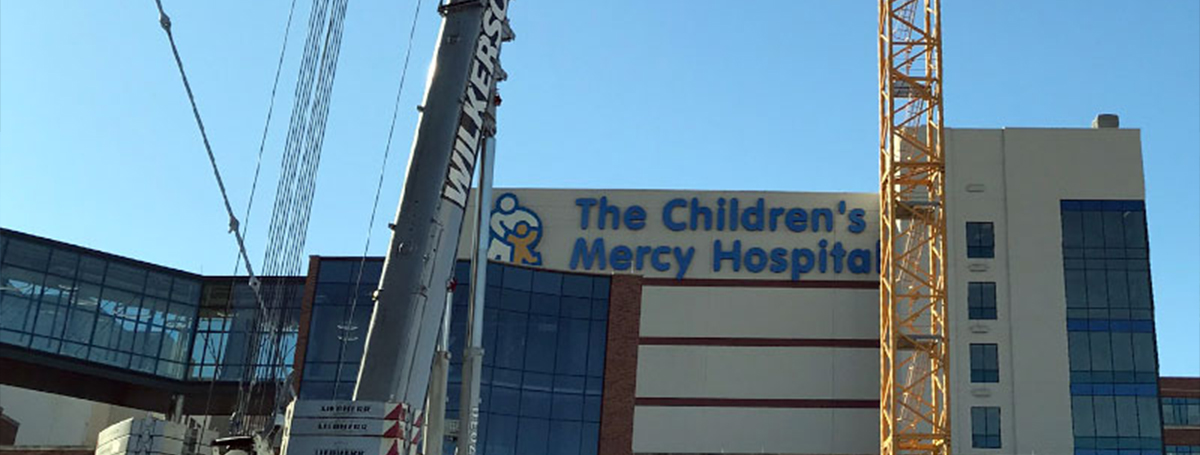
Children’s Mercy Hospital
Wilkerson Crane completed a high-precision tower crane lift in downtown Kansas City, navigating tight spaces and following strict safety protocols flawlessly.